Engine Oil Near Me: Where to Buy, What to Use & Safety Guide
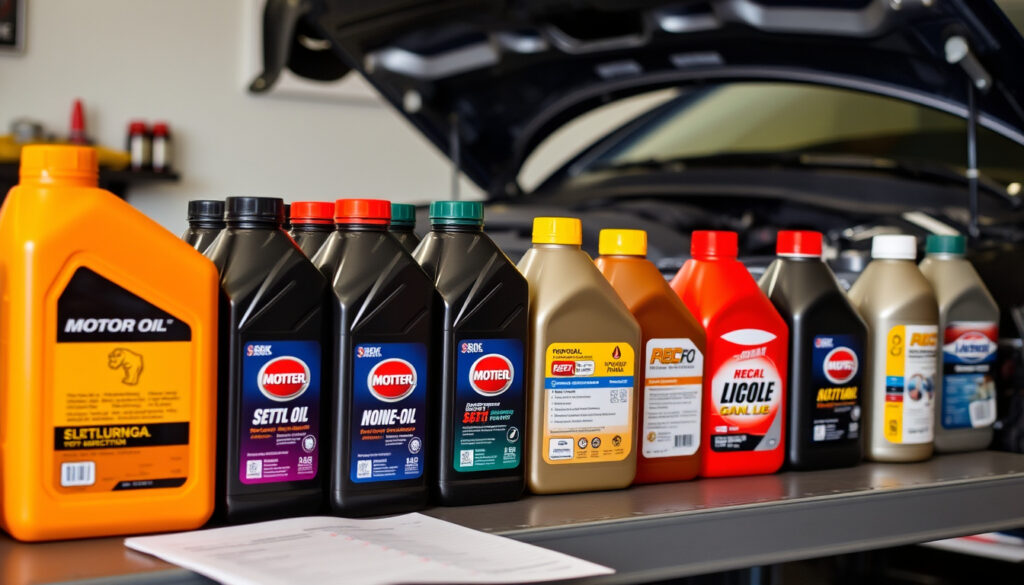
Anyone who’s ever stared blankly at a shelf of engine oil bottles knows the feeling: too many numbers, too few answers. If you’re searching for “engine oil near me,” you’re probably after more than just a bottle—you want to know which one fits your car, where to buy it locally, and what happens if you grab the wrong one. This guide covers all that, with Ireland-specific retailers and safety advice to keep your engine running.
Typical oil change interval: 5,000–7,500 miles (8,000–12,000 km) ·
Time before engine damage with low oil: As little as 20 minutes of driving ·
Fuel economy penalty for wrong viscosity: Up to 2% reduction ·
Number of viscosity grades in common use: Over 10 (e.g., 0W-20, 5W-30, 10W-40)
Quick snapshot
- Driving with low oil can cause engine failure within minutes (RAC Drive (UK motoring authority)).
- Using the wrong oil viscosity may lead to reduced engine protection (Motorcheck.ie (Irish vehicle history service)).
- Manufacturer oil specifications are critical for warranty (Halfords IE (Irish automotive retailer)).
- Exact mileage a particular engine can survive with low oil varies by design and operating conditions (RAC Drive (UK motoring authority)).
- Whether aftermarket oils without official approvals are safe in all engines is not universally established (ACEA (European automotive standards body)).
- Whether oil change intervals are strictly vehicle-specific or can be extended with synthetic oil is not universally established (RAC Drive (UK motoring authority)).
- ACEA published the latest oil sequences on 12 September 2023 (ACEA (European automotive standards body)).
- Most manufacturers recommend oil changes every 5,000–7,500 miles (RAC Drive). (ACEA (European automotive standards body))
- Check your oil level monthly and top up with the correct grade from a local retailer. (Castrol UK & Ireland (lubricant manufacturer))
- Use online tools like Castrol UK & Ireland (lubricant manufacturer) or Euro Car Parts (auto parts retailer) to confirm the right oil for your car.
Four key specifications, one pattern: every oil bottle tells a story of temperature tolerance and engine protection. The table below breaks down the most important numbers.
| Specification | Meaning |
|---|---|
| Viscosity grade (e.g., 5W-30) | Indicates flow at cold (5) and hot (30) temperatures |
| API certification | Current standard: SP (petrol) or CK-4 (diesel) |
| ACEA A5/B5 | Stable, stay-in-grade oil for extended drain intervals in petrol and diesel engines (ACEA (European automotive standards body)) |
| Oil change interval | 5,000–7,500 miles typical |
| Low oil warning threshold | Often 1–2 quarts below full |
| Manufacturer approvals | VW 504.00, MB 229.5, etc. – critical for warranty and engine health |
Can I buy engine oil at a petrol station?
Yes, but you’ll pay a premium for a limited selection. Petrol stations typically stock common viscosities like 5W-30 and 10W-40, enough for an emergency top-up. Supermarkets such as Tesco offer own-brand and major brand oils at better prices. Auto parts stores like Euro Car Parts (auto parts retailer) and Halfords carry the widest range, including manufacturer-specific oils. Online retailers such as Tyres.ie (Irish tyre and oil retailer) often beat physical shops on price and deliver to your door.
Fuel station oil selection
- Common grades only (5W-30, 10W-40).
- 24/7 availability but higher mark-up.
- No specialist advice on site.
The implication: petrol stations are a convenience option, not a place to shop for the perfect oil.
Supermarket options (Tesco, etc.)
- Own-brand oils (e.g., Tesco 5W-30) cost 20–30% less than branded equivalents.
- Selection limited to a few viscosities.
- Check for API/ACEA certification on the label.
What this means: supermarkets work for basic top-ups if your car takes a common grade, but don’t expect specialist recommendations.
Specialist auto parts stores
- Wide selection including synthetic, semi-synthetic and conventional.
- Staff can advise on manufacturer approvals.
- Euro Car Parts offers a registration lookup tool to display best-suited oils (Euro Car Parts).
Online retailers
- Cheapest prices overall, especially for bulk buys.
- Home delivery – but check shipping times if you need oil urgently.
- Use tools like Castrol UK & Ireland (lubricant manufacturer) or LIQUI MOLY (German oil specialist) to confirm fitment before ordering.
The pattern: online wins on price and variety, but you trade instant availability for savings.
For Irish drivers, buying from a petrol station is convenient but costly; plan ahead and use online tools to find the right oil at the best price.
Can I put any 5W30 oil in my car?
No. While 5W-30 is a common viscosity, not all 5W-30 oils are identical. Your car’s owner manual specifies required API/ACEA standards and manufacturer certifications. Using an oil without the correct approval can void your warranty or cause long-term engine wear.
What does 5W-30 mean?
- The “5W” indicates flow at low temperature (winter grade 5).
- The “30” indicates viscosity at 100°C (operating temperature).
- Multi-grade oils adjust viscosity across temperatures (Motorcheck.ie).
Viscosity and temperature range
- 5W-30 is suitable for most Irish winters, flowing well down to -30°C.
- Thicker oils (e.g., 10W-40) may be recommended for older engines or high-mileage vehicles (Crystal Valet (Irish car care blog)).
Manufacturer approvals (e.g., VW 504.00, MB 229.5)
- These are proprietary tests that go beyond basic viscosity.
- A European oil should meet ACEA standards – more specific than API for EU vehicles (Motor.com (trade publication)).
The catch: assuming all 5W-30 oils are interchangeable is a costly mistake. Always check the back of the bottle for the approval code.
Always verify the API/ACEA certification and manufacturer approval on the bottle before buying any 5W-30 oil.
What happens if I put 5W-20 instead of 5W-30?
5W-20 is thinner than 5W-30. In an engine designed for 5W-30, the thinner oil may not maintain a protective film at high temperatures, leading to increased metal-to-metal contact and potential engine damage. Conversely, using 5W-30 in an engine that calls for 5W-20 can reduce fuel economy by up to 2%.
Viscosity differences explained
- 5W-20 has lower viscosity at 100°C (about 6.9–9.3 cSt) vs 5W-30 (9.3–12.5 cSt).
- The “20” grade flows more easily when hot – good for fuel economy, bad for high-load protection.
Risks of using thinner oil
- Higher chance of oil pressure drops under load.
- Greater wear on bearings and camshafts.
- Some engines (e.g., certain Ford or Honda models) are designed for 5W-20; switching to 5W-30 could reduce fuel economy (RAC Drive).
When it might be acceptable
- In an emergency, a one-time top-up with a slightly different viscosity is unlikely to cause immediate failure.
- Always correct the mix at the next oil change.
The trade-off: fuel economy gains versus engine protection – if the manufacturer says 5W-30, stick with it unless you’re in a pinch.
Using 5W-20 in a 5W-30 engine risks long-term damage; only deviate in an emergency and correct it at the next change.
Is it okay to drive with low oil?
No. Driving with low oil reduces lubrication, causing overheating, increased friction, and eventual engine seizure. If the low oil pressure warning light comes on, stop the engine immediately and check the level.
How to check your oil level correctly
- Park on level ground, engine off, wait 5 minutes.
- Pull out the dipstick, wipe, reinsert, then read the level.
- Top up between minimum and maximum marks (Halfords IE).
Symptoms of low oil (warning light, knocking)
- Dashboard oil can warning light illuminates when pressure drops below safe threshold.
- Audible knocking or ticking from engine indicates serious friction.
- Loss of power or rough idle.
How far you can drive safely
- In an emergency, you may drive a very short distance (e.g., to a nearby garage) but risk significant damage beyond 20 minutes (RAC Drive).
- Once the warning light is on, every mile increases repair cost.
Why this matters: a €10 bottle of oil is cheap insurance against a €2,000 engine rebuild.
An engine starved of oil for 20 minutes can suffer irreversible bearing and crankshaft damage. For Irish drivers, always keep a litre of the correct oil in the boot – most petrol stations and supermarkets stock it, but you need to know your grade first.
The pattern: never gamble with low oil – a quick top-up costs far less than a replacement engine.
Keep a litre of the correct oil in your boot and check levels monthly to avoid costly engine damage.
How often should you change engine oil?
Most manufacturers recommend oil changes every 5,000–7,500 miles (8,000–12,000 km) under normal driving. Severe conditions – short trips, towing, extreme temperatures – can halve that interval. Modern synthetic oils may last 10,000–15,000 miles in some vehicles; always follow the owner’s manual.
Standard vs severe service intervals
- Standard: 5,000–7,500 miles or 12 months, whichever comes first.
- Severe: 3,000–5,000 miles for stop-start urban driving or frequent short journeys.
- Check your vehicle’s maintenance schedule (RAC Drive).
Synthetic vs conventional oil lifespan
- Full synthetic: up to 15,000 miles in some engines.
- Conventional: 3,000–5,000 miles.
- Synthetic blend: mid-range performance.
Signs you need an oil change
- Oil on dipstick appears dark and gritty.
- Engine runs louder than usual.
- Oil change reminder light activates.
The pattern: oil is cheap, engines are not – change it on schedule, and use the grade your car’s manufacturer specifies.
Follow the manufacturer’s schedule from your owner’s manual – skipping oil changes risks expensive engine damage.
Three common buying channels, one pattern: convenience costs money, and selection requires a trip. The table below compares where Irish drivers can buy engine oil.
| Retailer type | Price range (5L 5W-30) | Viscosity selection | Expert advice |
|---|---|---|---|
| Petrol station | €40–€60 | 2–3 grades | None |
| Supermarket (Tesco) | €25–€45 | 3–5 grades | Minimal |
| Auto parts store (Euro Car Parts, Halfords) | €20–€50 | 10+ grades | Good |
| Online (Tyres.ie, Amazon) | €15–€40 | 15+ grades | Online tools |
Six viscosity grades, one takeaway: the lower the winter number, the better the cold-start protection. The table below shows common grades and their typical applications.
| Grade | Viscosity at 100°C (cSt) | Typical use | ACEA category |
|---|---|---|---|
| 0W-20 | 6.9–9.3 | Modern fuel-efficient petrol engines | A5/B5, C5 |
| 5W-20 | 6.9–9.3 | Ford, Honda, some Hyundai/Kia | A5/B5, C5 |
| 5W-30 | 9.3–12.5 | Most petrol and diesel cars in Ireland | A3/B4, A5/B5, C3 |
| 10W-40 | 12.5–16.3 | Older engines, high-mileage vehicles | A3/B4 |
| 0W-30 | 9.3–12.5 | European performance cars, cold climates | A5/B5, C2 |
| 5W-40 | 12.5–16.3 | Diesel engines, turbocharged petrol | A3/B4, C3 |
Confirmed facts
- Driving with low oil can cause engine failure within minutes (RAC Drive (UK motoring authority)).
- Using the wrong oil viscosity may lead to reduced engine protection (Motorcheck.ie (Irish vehicle history service)).
- Manufacturer oil specifications are critical for warranty (Halfords IE (Irish automotive retailer)).
What’s unclear
- Exact mileage a particular engine can survive with low oil varies by design and operating conditions.
- Whether aftermarket oils without official approvals are safe in all engines is not universally established (ACEA (European automotive standards body)).
- Whether oil change intervals are strictly vehicle-specific or can be extended with synthetic oil is not universally established.
Irish drivers often face a choice between cheaper supermarket oil and a pricier branded product that meets the exact manufacturer spec. The saving may not be worth it if the oil lacks the right ACEA approval – one botched oil change can lead to deposits and sludge that shorten engine life.
“Most manufacturers recommend oil changes every 5,000 to 7,500 miles under normal driving. For severe driving, that interval can drop to 3,000 miles. Always check your owner’s manual.”
AAA spokesperson (American Automobile Association, motoring authority)
“The 2019 Toyota Corolla diesel requires 5W-30 oil meeting ACEA A3/B4 or API SN. Using any other grade may affect engine performance and warranty coverage.”
Toyota owner’s manual (2019 Corolla diesel)
“In Ireland, we see many drivers buying the wrong oil because they don’t know their car’s specific ACEA or API requirement. Our registration lookup tool helps them get it right.”
Euro Car Parts technician (Irish auto parts retailer)
For Irish drivers, the choice is clear: know your car’s exact oil specification before you buy, and don’t rely on a petrol station top-up for long-term health. Use online tools from Castrol UK & Ireland (lubricant manufacturer) or Euro Car Parts (auto parts retailer) to lock in the right grade, then find the best price locally – whether that’s at a supermarket, auto parts store, or delivered to your door. Ignore the specification, and you risk an expensive repair that a €20 bottle of oil could have prevented.
Before you head out to buy, make sure you know exactly what your car needs by choosing the right engine oil to avoid damaging your engine.
Frequently asked questions
Can I mix different brands of engine oil?
In an emergency, mixing brands of the same viscosity and specification is acceptable, but it’s best to stick with one brand. Different additive packages can react unpredictably.
Is synthetic oil better than conventional oil?
Synthetic oil offers better protection at high temperatures, improved cold-start flow, and longer drain intervals. It costs more but often pays for itself in extended engine life.
How do I dispose of used engine oil?
Used oil is hazardous waste. In Ireland, return it to your local recycling centre or to any retailer that sells engine oil (many accept it free of charge). Never pour it down drains or into the ground.
Can I use diesel oil in a petrol engine?
Some diesel oils (e.g., those with ACEA C3 certification) are also suitable for petrol engines, but check the label. Diesel oils often have higher levels of detergents and anti-wear additives that may not be optimal for petrol catalysts.
What does the ‘W’ stand for in 5W-30?
The ‘W’ stands for “winter.” It indicates the oil’s low-temperature viscosity. The number before the W (5) shows how well it flows in cold conditions; lower numbers mean better cold-weather performance.
How do I check my engine oil level correctly?
Park on a level surface, turn off the engine, and wait five minutes. Pull out the dipstick, wipe it clean, reinsert it fully, then pull it out again. The oil level should be between the ‘Min’ and ‘Max’ marks. Top up if needed, using the grade specified in your owner’s manual.
More related posts
 Vietnamese Food Near Me: Pho, Health, And Dublin’s Best Spots
 Sid from Ice Age – Backstory, Family, Voice and Facts
 Victoria Pedretti Movies and TV Shows: Full Filmography
 T-Mobile Customer Service Number 24/7 – Phone Numbers, Hours & Tips
 Lakers vs Timberwolves Match Player Stats: Key Numbers & Analysis
 Rick Harrison in Jail? Pawn Stars Rumor Fact Check
 How Long Does the Flu Last? Stages, Duration & Recovery Timeline
 Square Root of 20 Simplified: Value, Methods & Examples