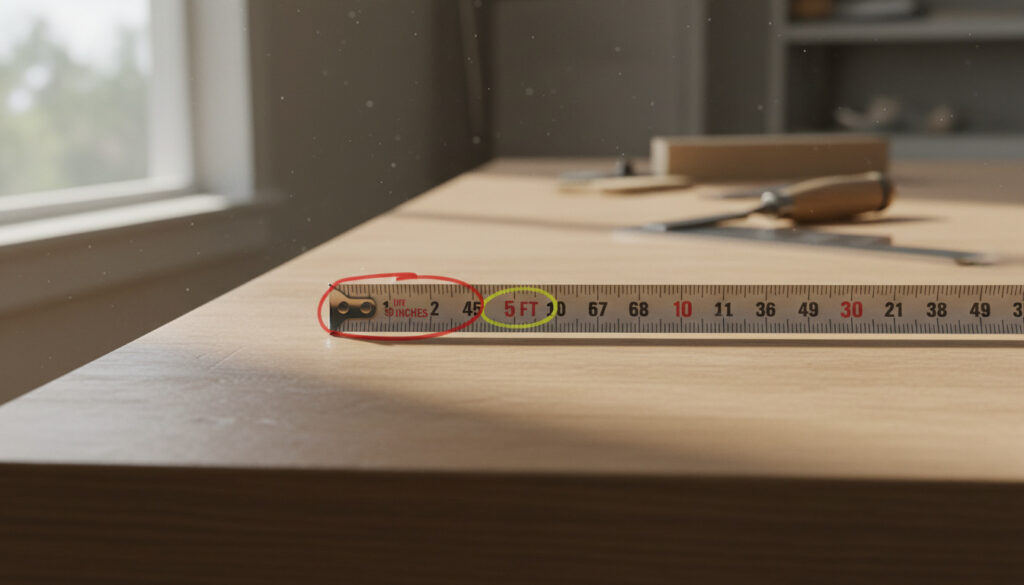
How Many Inches is 5 Feet – Precise Conversion Guide
Five feet equals exactly sixty inches. This conversion relies on the fundamental definition of the US customary system, where one foot comprises precisely twelve inches. Whether measuring height, room dimensions, or material lengths, this ratio remains constant across applications.
The relationship between feet and inches dates back to historical English units standardized over centuries. Modern definitions established by the National Institute of Standards and Technology ensure consistency, though subtle distinctions exist between international and legacy survey measurements.
Understanding this conversion requires familiarity with the base unit structure. Twelve inches make one foot, three feet compose one yard, and these relationships form the backbone of American linear measurement.
How Many Inches is 5 Feet?
- Exact conversion: 5 feet equals precisely 60 inches with no rounding required
- Historical basis: The foot derives from ancient human foot-length measurements
- Modern standard: Defined by NIST as exactly 0.3048 meters per international foot
- Instant calculation: Multiply any foot measurement by twelve to obtain inches
- Dual definitions: Both international and US survey feet yield 60 inches at 5 feet (with micro-variation in survey)
- Universal application: Used consistently in construction, height measurement, and manufacturing
| Measurement | Inches | Centimeters | Notes |
|---|---|---|---|
| 5 feet | 60 | 152.4 | Exact |
| 1 foot | 12 | 30.48 | Base unit |
| 5 feet 6 inches | 66 | 167.64 | Common height |
| 10 feet | 120 | 304.8 | Standard room height |
| 0.5 feet | 6 | 15.24 | Half foot |
| 60 inches | 60 | 152.4 | Reverse of 5 feet |
How Many Inches in a Foot?
One foot contains exactly twelve inches. This definition serves as the foundation for all US customary length measurements, established through standardized agreements between English-speaking nations and maintained by NIST.
The Standard Definition
The modern international foot equals precisely 0.3048 meters. NIST Handbook 44 establishes that twelve inches constitute one foot, three feet make one yard, and 1,760 yards comprise one mile. These relationships remain exact by definition.
Historical Origins
The foot originated from practical measurements based on the human body. Ancient civilizations used the length of a human foot as approximation, though this varied by region. Standardization efforts in England during the medieval period gradually fixed the length, eventually leading to the international agreement of 1959 that defined the foot as exactly 0.3048 meters.
International vs US Survey Foot
Distinctions emerge between the international foot and the US survey foot. The US survey foot, approximately 0.304800609601 meters, served surveying applications until phased out after 2022. At five feet, this creates a negligible difference of 0.00012 inches—insignificant for most purposes but critical for precise land measurement.
NIST mandates the international foot for all modern applications. The survey foot remains relevant only for historical survey data recorded prior to the 2022 transition.
How to Convert Feet to Inches
Converting feet to inches requires simple multiplication. The formula inches = feet × 12 applies universally, whether working with whole numbers, decimals, or mixed measurements.
The Multiplication Method
For any measurement in feet, multiply by twelve to obtain inches. Conversion calculators verify that five feet multiplied by twelve equals sixty inches exactly. This method works for fractional feet—0.5 feet converts to six inches, while 2.5 feet becomes thirty inches.
Handling Mixed Measurements
Measurements combining feet and inches require two steps. First, convert the feet portion by multiplying by twelve. Then add the remaining inches. For example, five feet six inches becomes (5 × 12) + 6, totaling sixty-six inches.
Common Calculation Errors
Mistakes typically involve inverse operations. Dividing instead of multiplying yields incorrect results—five inches equals approximately 0.4167 feet, not five feet. Technical documentation emphasizes proper notation to avoid confusion.
When documenting measurements containing both feet and inches, separate units with a space rather than a hyphen. Write “5 feet 6 inches” rather than “5 feet – 6 inches” for clarity in technical specifications.
Related Conversions for 5 Feet
Sixty inches represents the baseline, yet practical applications often require adjacent measurements. Understanding conversions to metric units and mixed formats extends utility across different contexts.
5 Feet to Centimeters and Meters
Using the international foot definition of 0.3048 meters, five feet converts to 1.524 meters or 152.4 centimeters. Conversion tools confirm these metric equivalents. Precise calculation requires maintaining significant figures—rounding prematurely introduces errors.
60 Inches Back to Feet
Reverse conversion follows division: sixty inches divided by twelve equals five feet exactly. This operation proves useful when working with raw inch measurements from manufacturing specifications or international standards.
5 Feet 6 Inches Conversion
Popular height measurements combine units. Five feet six inches translates to sixty-six inches total, or 1.6764 meters. Specialized converters handle these mixed inputs automatically.
Confusing the US survey foot with the international foot creates discrepancies. Five survey feet equal approximately 60.00012 inches—a difference of roughly three-hundredths of an inch per mile. Modern standards mandate the international foot to prevent such variances.
When Did the Foot Measurement Standardize?
The definition of the foot evolved from biological approximation to precise mathematical standard. Key milestones mark this progression from variable ancient units to modern international agreement.
-
Ancient Origins
Civilizations including the Romans and Egyptians used foot-based measurements derived from human anatomy, though lengths varied significantly by region and ruler.
-
Medieval English Standardization
English monarchs attempted to fix the foot’s length, with the yard established as the length of a specific king’s arm or other royal standards, eventually stabilizing around twelve inches per foot.
-
1959 International Agreement
English-speaking nations formally defined the international yard as exactly 0.9144 meters, thereby fixing the foot at precisely 0.3048 meters and the inch at exactly 25.4 millimeters.
-
2022 US Survey Foot Phase-Out
NIST discontinued the US survey foot for new surveying work after December 31, 2022. Current guidance mandates the international foot for all applications to eliminate discrepancies.
-
Present Standard
The international foot serves as the sole legal measurement unit in the United States for commerce, engineering, and everyday use, with twelve inches constituting one foot by immutable definition.
What Is Established vs. What Requires Care?
Established Facts
- Five feet equals exactly sixty inches
- One foot comprises exactly twelve inches by definition
- The international foot equals precisely 0.3048 meters
- Conversion formula: inches = feet × 12
Nuances and Cautions
- Historical survey data may use the US survey foot (0.304800609601 m), creating micro-discrepancies
- Metric conversions involve decimal approximations requiring significant figure management
- Older documentation might reference obsolete foot definitions
Where Does the Five-Foot Measurement Appear?
Sixty inches represents a common benchmark across multiple industries. In residential construction, five feet often marks the width of standard doorways or the depth of kitchen countertops. Human height measurements frequently cluster around this value, particularly for adult women in the United States. Can Cats Have Blueberries explores other measurement contexts in domestic spaces.
Manufacturing specifications utilize this length for material cuts, while sports equipment—such as certain hockey sticks or rowing oars—dimensions often reference five-foot lengths. The ubiquity of this measurement stems from its practicality: large enough to represent substantial length, yet small enough for manual handling.
What Do Standards Officials Say?
“There are 12 inches in a foot.”
— US Customary Units Definition, NIST Handbook 44
All SI equivalents now use the international foot.
— National Institute of Standards and Technology
How Do You Convert 5 Feet to Inches?
Five feet equals sixty inches exactly. Multiply any foot measurement by twelve to obtain the inch equivalent, or divide inches by twelve to reverse the calculation. While historical survey data might contain micro-variations using the obsolete US survey foot, modern standards define this relationship as absolute. Fade Haircut for Men demonstrates how these measurements apply to personal dimensions.
Frequently Asked Questions
Why 12 inches in a foot?
The twelve-inch foot originated from historical English measurement systems. The number twelve divides easily by 2, 3, 4, and 6, facilitating practical calculations for carpenters and merchants before decimal systems became standard.
How many cm is 5 feet?
Five feet equals 152.4 centimeters. Multiply 5 by 30.48 (the exact centimeter equivalent of one international foot) to obtain this conversion.
Is 5 feet 60 inches?
Yes. Five feet equals exactly sixty inches. This is a definitional equality within the US customary system, not an approximation.
How many inches is 5 feet 6 inches?
Five feet six inches equals sixty-six inches. Calculate by multiplying five feet by twelve (sixty) and adding the remaining six inches.
60 inches equals how many feet?
Sixty inches equals five feet exactly. Divide sixty by twelve to reverse the conversion.
What is the difference between US survey feet and international feet?
The international foot equals exactly 0.3048 meters. The US survey foot equals approximately 0.304800609601 meters. At five feet, this creates a 0.00012-inch difference. NIST phased out the survey foot in 2022.
More related posts
 Ruth and Boaz Movie: Cast, Plot, Reviews, Biblical Connection
 What Time Is It in Las Vegas Right Now? Live PDT Clock
 Seo Ye Ji: Biography, Controversy, and 2025 Comeback
 Sally Beauty Near Me: Store Hours, Locations & Closures
 Best Movies on Disney Plus: Top Picks from RT, IMDb & More
 What Does Black Mold Look Like? Visual Guide, Symptoms & Removal
 Jessica Camacho Movies and TV Shows: Full Career Guide
 What Are Intrusive Thoughts? Examples, Causes & Treatment