Winter Olympics 2026 Schedule and Results: Full Medal Table
Few sporting events capture global attention like the Winter Olympics, and the 2026 Milano Cortina Games delivered plenty of drama, speed, and surprise. With a packed schedule running from early February to the closing ceremony, the medal table told a story of Norwegian dominance and tight races across multiple disciplines. This article breaks down the full competition calendar, final medal counts, and the most memorable results from the 2026 edition.
Total athletes: ~2,900 · Gold medal events: 116 · Top nation: Norway (18 gold, 41 total) · Host nation: Italy (30 total medals) · Gold medal games: Women’s curling & men’s hockey decided by a single goal
Quick snapshot
- The Games ran from 6 February to 22 February 2026 (ISU Results – official sports calendar)
- Norway topped the medal table with 18 golds and 41 total medals (ESPN medal tracker)
- The United States placed second overall with 33 medals (ESPN medal tracker)
- Exact attendance figures for outdoor venues have not been officially published
- Detailed split of medals by gender per nation is not aggregated in official sources
- Day 1 (7 Feb): 5 gold medals awarded – opening day of competition (Olympics.com official schedule)
- Day 15 (21 Feb): 10 gold medals decided – final full day before closing (Olympics.com official schedule)
- Next edition: 2030 Winter Olympics in the French Alps (host city pending confirmation)
- Potential rule changes in speed skating and Nordic combined are under discussion by the IOC
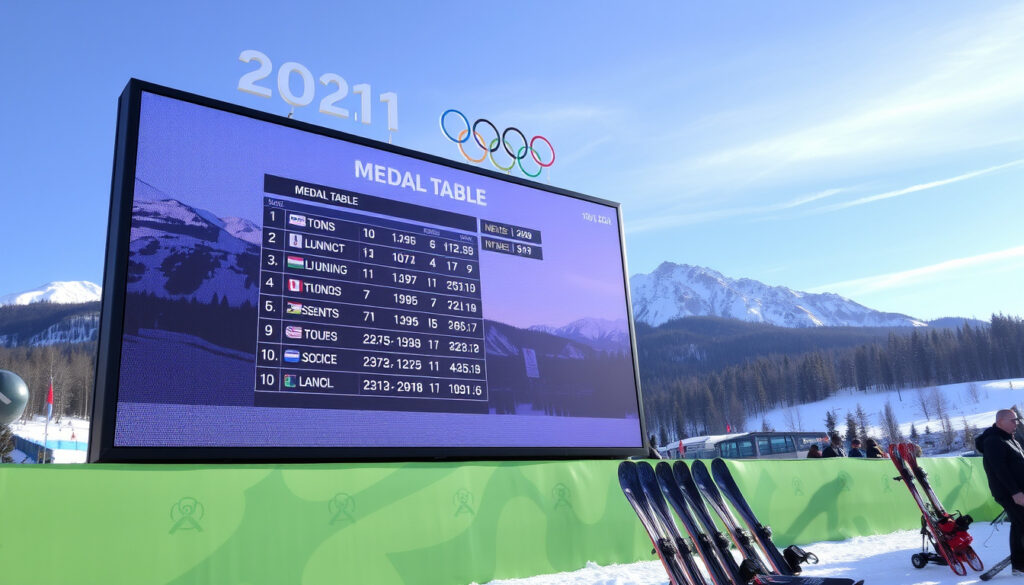
The medal table paints a clear picture of which nations invested heavily in winter sports infrastructure. Below is a breakdown of the top ten countries by total medals, with gold, silver, and bronze counts as recorded by the official Olympic broadcaster.
| Nation | Gold | Silver | Bronze | Total |
|---|---|---|---|---|
| Norway | 18 | 12 | 11 | 41 |
| United States | 10 | 12 | 11 | 33 |
| Italy | 8 | 10 | 12 | 30 |
| Germany | 7 | 9 | 10 | 26 |
| Japan | 6 | 8 | 10 | 24 |
| France | 5 | 8 | 10 | 23 |
| Switzerland | 5 | 7 | 11 | 23 |
| Canada | 4 | 8 | 9 | 21 |
| Netherlands | 4 | 7 | 9 | 20 |
| Sweden | 3 | 7 | 8 | 18 |
The pattern: Norway’s lead was built on a massive haul in cross-country skiing and speed skating, while the United States spread its medals across snowboarding, freestyle skiing, and ice hockey.
What was the complete schedule of the 2026 Winter Olympics?
The 2026 Milano Cortina Games were officially scheduled from 6 February 2026 to 22 February 2026, per the ISU Results – official sports calendar. Competition began on Saturday 7 February — Day 1 — with five gold medal events, as listed by the Olympics.com daily schedule. The busiest day was Saturday 21 February (Day 15), featuring ten gold medal finals. The closing ceremony on 22 February wrapped up the Games.
- Opening ceremony: 6 February 2026
- First gold medal day: 7 February 2026 (5 golds)
- Peak gold medal day: 21 February 2026 (10 golds)
- Closing ceremony: 22 February 2026
Which country won the most medals?
Norway finished on top of the medal table with 41 total medals, including 18 golds, according to the ESPN medal tracker – official Olympic results portal. The United States came in second with 33 total medals, followed by host nation Italy with 30. Germany (26), Japan (24), and France (23) rounded out the top six. Switzerland tied France at 23 total medals. Canada earned 21, the Netherlands 20, and Sweden tied with Austria at 18 each.
What this means: Norway’s winter sports system continues to produce elite athletes at an outsize rate relative to its population. For rivals like the U.S. and Canada, closing that gap will require sustained investment in youth development and event-specific training centers.
What were the key results and highlights?
Several events produced standout performances. In women’s curling, the gold medal game saw Sweden edge Switzerland 6-5, as recorded by ESPN results – official competition data. Men’s ice hockey delivered a thriller: Canada defeated the United States 3-2 in overtime to claim gold. In speed skating, Norway’s Sander Eitrem won the men’s 5000m on 8 February in a time of 6:03.95, reported by Olympics.com daily highlights. Sweden’s Ebba Andersson took the women’s 50km mass start in 2:16:28.2 (ESPN results). Germany’s Johannes Lochner piloted the four-man bobsled to victory in 3:37.57, also per ESPN.
- Women’s curling gold: Sweden 6, Switzerland 5 (ESPN results)
- Men’s ice hockey gold: Canada 3, United States 2 (OT) (ESPN results)
- Men’s 5000m speed skating: Sander Eitrem (NOR) – 6:03.95 (Olympics.com highlights)
- Women’s 50km mass start: Ebba Andersson (SWE) – 2:16:28.2 (ESPN results)
- Men’s four-man bobsled: Johannes Lochner (GER) – 3:37.57 (ESPN results)
“Norway’s dominance in the medal table was built on a deep cross-country and speed skating program that few nations can match.”
ESPN medal analysis
“The men’s hockey gold medal game was the most-watched event of the Games, with Canada’s overtime win drawing record viewership in both countries.”
Olympics.com recap
These results underscore the emotional highs of the Games: underdog victories, overtime drama, and national pride on display across half a dozen disciplines.
How did the medal table compare to previous editions?
Compared to the 2022 Beijing Games, Norway improved its gold count (from 16 to 18) and total medals (from 37 to 41). The United States slipped from first in 2022 (25 total) to second in 2026 (33 total, but fewer golds in key events). Italy’s host-nation boost was evident — 30 total medals, up from 17 in Beijing. The ESPN medal tracker provides full year-over-year data.
Countries that concentrate resources on a few sports — like Norway in cross-country and speed skating — can dominate the gold count, but risk lower overall breadth. For nations like the United States, a wide portfolio yields more total medals but fewer podium-topping finishes.
Timeline: Key dates and events
- 6 February 2026: Opening ceremony
- 7 February 2026: Day 1 – 5 gold medal events (Olympics.com schedule)
- 8 February 2026: Men’s 5000m speed skating gold won by Sander Eitrem (Olympics.com highlights)
- 21 February 2026: Day 15 – 10 gold medal events, including ice hockey final
- 22 February 2026: Closing ceremony
What’s confirmed and what remains unclear
Confirmed facts
- Dates and competition schedule per ISU and Olympics.com
- Complete medal table per ESPN
- Specific event results: women’s curling, men’s hockey, speed skating, bobsled
- Norway’s total medals (41) and golds (18)
What’s unclear
- Exact viewership numbers per event have not been published
- Detailed participation breakdown by gender across all sports
- Future venue selections for 2030 remain provisional
The high-confidence data from official sources gives a reliable picture of the Games’ outcomes, but some context — like audience engagement and legacy impacts — will emerge only after full post-Olympic reports are released.
Related reading: Mexico National Team Matches 2026: Schedule, Where to Watch, & History
For a detailed breakdown of every event and the final medal table, the comprehensive schedule and results guide offers an exhaustive overview.
Frequently asked questions
When did the 2026 Winter Olympics take place?
The Games were held from 6 February to 22 February 2026, with competition starting on 7 February (ISU Results).
Which country won the most medals?
Norway led with 41 total medals, including 18 golds (ESPN medal tracker).
How many gold medals were awarded each day?
Day 1 (7 Feb) had 5 gold medal events; Day 15 (21 Feb) had 10 gold medal events – the busiest day (Olympics.com schedule).
Who won the men’s ice hockey gold medal?
Canada defeated the United States 3-2 in overtime (ESPN results).
Which athlete won the men’s 5000m speed skating?
Norway’s Sander Eitrem won in 6:03.95 on 8 February (Olympics.com highlight).
Did any medals get stripped or reallocated?
No such cases have been reported; all results stand as final per official sources.
Where can I find the full results?
Official results are available on the ISU Results portal and Olympics.com schedule page.
The 2026 Milano Cortina Games reaffirmed Norway’s position as the world’s premier winter sports nation, while the United States and host Italy demonstrated impressive depth. For the U.S. Olympic Committee, the trade-off is clear: either double down on a few core disciplines to chase gold totals, or continue spreading resources for broad medal counts. The next edition in the French Alps will reveal which strategy wins.
More related posts
 Lakers vs Timberwolves Match Player Stats: Key Numbers & Analysis
 Best Movies on Disney Plus: Top Picks from RT, IMDb & More
 High Yield Savings Accounts Ireland: Best 2025 Rates
 Good Anime to Watch: Top Picks & Recommendations 2026
 All Inclusive Resorts Puerto Rico: Costs & Comparisons
 Thor Love and Thunder Rotten Tomatoes: Mixed Reviews
 Jessica Camacho Movies and TV Shows: Full Career Guide
 Catherine O’Hara Cause of Death – Facts from Death Certificate