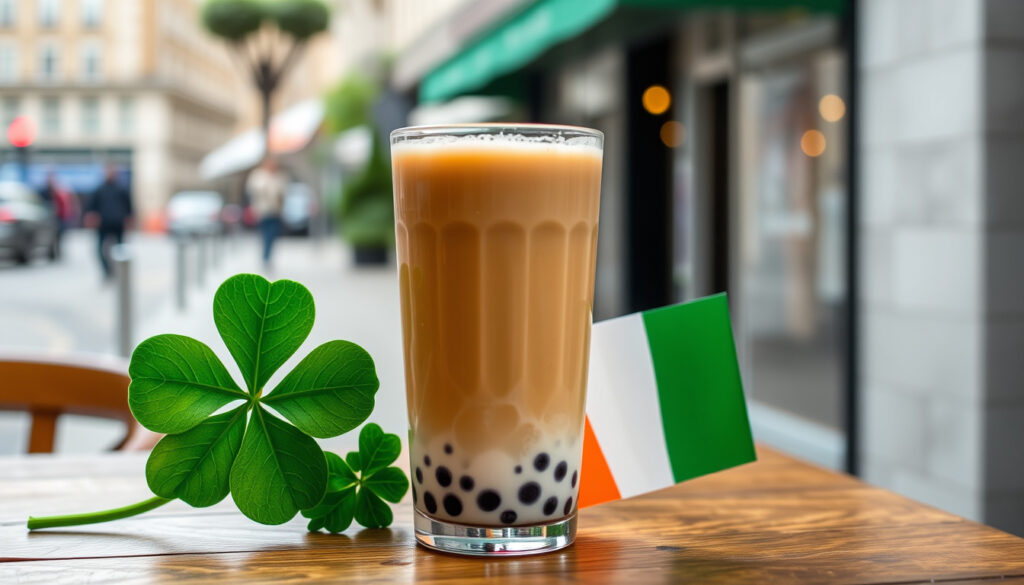
Bubble Tea Near Me: Is It Healthy? Where to Buy in Ireland
There’s something about bubble tea that makes it hard to resist — those chewy tapioca pearls at the bottom of a cold, sweet drink. With the global bubble tea market valued at $2.4 billion in 2023 and more than 50 bubble tea shops in Dublin alone, this Taiwanese creation has become a local staple. Here’s how to find the best bubble tea near you, what to look for on the label, and where to buy it from supermarkets like Aldi.
Global bubble tea market size (2023): $2.4 billion ·
Average sugar per 16oz serving: 38g ·
Bubble tea shops in Dublin: 50+ ·
Origin: Taiwan, 1980s
Quick snapshot
- Taiwanese drink from the 1980s
- Made with tapioca pearls or fruit jellies
- Served cold with tea and milk
- High in sugar, up to 50g per serving (Diabetes Ireland guide)
- Tapioca provides minimal nutrients (Diabetes Ireland guide)
- Moderation recommended (Diabetes Ireland guide)
- Delivery: Just Eat, Uber Eats (Uber Eats Dublin)
- Supermarkets: Tesco (Tesco Groceries)
- Local chains: Nana’s Tea in Bray (Uber Eats Dublin)
- Tesco stocks Bubbleology bubble tea kits (suitable for vegetarians) (Tesco Groceries)
- Aldi Ireland follows FSAI reformulation guidelines for healthier products (ALDI IE – Healthier)
A few numbers that define the bubble tea landscape in Ireland.
| Bubble tea origin | Taiwan, 1980s |
| Tapioca pearl base | Cassava starch |
| Average calories per cup | 300–500 |
| Aldi UK price per bottle | £1.99 |
| Number of shops in Dublin | 50+ |
| Delivery platforms in Dublin | Just Eat, Uber Eats (Uber Eats Dublin) |
Is Bubble Tea Healthy to Drink?
The short answer: it depends on how much and what kind. A standard 16oz bubble tea can pack more sugar than a can of cola, which is why health organisations flag it as a drink to consume in moderation.
Nutritional breakdown of bubble tea
- A typical serving contains 300–500 calories, mostly from sugar and tapioca starch.
- Added syrups and sweetened condensed milk drive up the sugar content — often exceeding 38g per cup (Diabetes Ireland guide advises avoiding high-sugar drinks).
- Tapioca pearls provide almost no vitamins, minerals, or fibre.
For a 16oz bubble tea with full sugar, you’re consuming roughly half the daily recommended sugar limit for an adult in one sitting.
Health risks of boba: sugar, caffeine, and lead contamination
- The tea base adds caffeine — a large cup can contain 100–150mg, comparable to a standard coffee.
- Some studies have reportedly found traces of lead in tapioca pearls, though the evidence is not uniform (consumer experience notes uncertainty).
- Swallowing pearls whole poses a choking risk, especially for children.
Comparing bubble tea to other sugary drinks
A 16oz bubble tea can contain 38–50g of sugar — the same as a 12oz soda. The Diabetes Ireland guide groups all such drinks together, recommending water or unsweetened beverages instead (Diabetes Ireland PDF).
What this means: bubble tea is best treated as an occasional treat, not a daily refreshment. The trade-off is simple — enjoy the sensory experience but balance it with lower-sugar choices the rest of the day.
What is the Difference Between Boba and Bubble Tea?
The terms are often used interchangeably, but there’s a clear distinction: bubble tea is the drink; boba refers specifically to the chewy tapioca pearls inside it.
Origins of boba vs bubble tea
- Bubble tea — the full drink — originated in Taiwan in the 1980s (Tesco Groceries notes the product as a Taiwanese-style tea).
- Boba (the pearls) have been used in Taiwanese desserts for decades before being added to tea.
- The name “bubble tea” comes from the frothy bubbles created when shaking the drink.
Ingredients: tapioca pearls vs other toppings
- Boba is made from cassava starch, giving it a chewy, gummy texture (ALDI IE – Healthier describes tapioca as a starch base).
- Other popular toppings include popping boba (fruit juice spheres), jelly cubes, and pudding.
- The drink base can be black tea, green tea, or a milk-based blend.
Regional variations in naming
- In Taiwan, “boba” is the term for pearls; the drink is “boba tea.”
- In the US and Europe, “bubble tea” is more common for the overall category.
- Irish shops tend to use “bubble tea” on menus, but “boba” is understood by regulars.
The implication: when you search “bubble tea near me”, you’re looking for the full drink. If you ask for extra boba, you’re asking for more pearls. Knowing the difference helps you order with confidence.
What is the Main Ingredient in Bubble Tea?
Tapioca pearls: composition and processing
- Tapioca pearls are made from cassava root starch (ALDI IE – Healthier confirms tapioca as a common ingredient).
- The starch is mixed with water, formed into small spheres, then boiled until chewy.
- They have a neutral flavour and absorb the sweetness of the syrup they’re soaked in.
Tea base: black tea, green tea, or milk tea
- Most bubble tea starts with a strong black or green tea base (Tesco Groceries lists jasmine tea in its Bubbleology product).
- Milk tea versions add creamer or sweetened condensed milk for a rich texture.
- Fruit teas replace milk with fruit syrups and purées.
Sweeteners and flavourings
- Simple syrup, honey, or flavoured powders are common sweeteners.
- Many shops let customers adjust sweetness levels (0% to 100%).
- The Diabetes Ireland guide explicitly cautions against drinks with added syrups.
The pattern: the drink is 80% tea and sweetener, 20% toppings. The tapioca pearls are the textural star, but the sugar comes mostly from the liquid base.
Do You Eat the Bubbles in Bubble Tea?
Chewing vs swallowing: texture and enjoyment
- Boba pearls are designed to be chewed, not swallowed whole (Tesco Groceries product description emphasises the “chewy” texture).
- Chewing releases the subtle sweetness and creates the signature experience.
- Swallowing them whole defeats the purpose — the pleasure is in the bite.
Is it safe to swallow boba?
- Whole pearls can be a choking hazard, especially for children under 4.
- The consumer experience suggests adults should be mindful if eating quickly.
- If you accidentally swallow a pearl whole, it usually passes through, but it’s not recommended.
Serving tip: using a wide straw
- A wide straw (around 12mm diameter) is essential to suck up the pearls.
- Regular straws won’t work — the pearls are too large.
- Most bubble tea shops provide the correct straw automatically.
For toddlers and young children, bubble tea can be a choking hazard. Cut the pearls in half or skip them entirely for little ones.
The catch: the very feature that makes bubble tea fun — the chewy pearls — also demands careful eating. Chew thoroughly, use the right straw, and never rush.
Does Aldi Sell Bubble Tea?
Aldi UK bubble tea products
- Aldi UK has introduced its own brand of bubble tea drinks (ALDI IE – Homepage suggests the retailer expands product lines regularly).
- These are usually bottled, ready-to-drink versions, not DIY kits.
- Prices are competitive — around £1.99 per bottle.
The £13 rule explained
- The “£13 rule” refers to a pricing strategy used by UK supermarkets to keep basket totals low.
- It is not specific to Aldi Ireland but is a common promotional target.
- Shoppers can buy bubble tea and other items within that threshold if they plan carefully.
Other supermarkets selling bubble tea
- Tesco stocks Bubbleology kits (Tesco Groceries) for £2.50–£3.00.
- Lidl has occasionally offered bubble tea as a Specialbuy.
- Check the chilled aisle near fresh juices for the widest selection.
Why this matters: if you’re in Ireland and want bubble tea without visiting a dedicated shop, Aldi and Tesco are your best bets. The ready-to-drink bottles are convenient but check the sugar content — some contain as much as a full-strength soda.
Where Can I Find Bubble Tea Near Me?
Using delivery apps: Just Eat and Uber Eats
- Just Eat and Uber Eats both list bubble tea options in Dublin and other Irish cities (Uber Eats Dublin shows Aldi availability alongside bubble tea shops).
- Filter by “Bubble Tea” or “Boba” to see nearby options.
- Delivery radius varies; enter your address to see which shops serve your area.
Popular bubble tea chains in Ireland
- Nana’s Tea in Bray is a local favourite, known for fresh pearls.
- Chatime and Bubbleology have a presence in Dublin city centre.
- Small independent cafés often list bubble tea on their menus.
How to find bubble tea shops near you
- Use Google Maps and search “bubble tea” — results show shops in Tullamore, Cork, and Galway.
- Yelp reviews can help you find the best-rated spots.
- Many shops offer “bubble tea near me open now” if you add that to your search.
Delivery adds €2–€4 to the cost. If you’re ordering from a supermarket via Uber Eats, check the minimum order to avoid paying more than the drink is worth.
The pattern: the search “bubble tea near me” returns more delivery platforms than standalone shops. Use the apps to compare prices and sugar levels before ordering.
Comparison: Bubble tea vs soda vs coffee (per 16oz)
Three popular drinks, one clear difference in sugar content.
| Drink | Sugar (g) | Calories | Caffeine (mg) |
|---|---|---|---|
| Bubble tea (full sugar) | 38–50 | 300–500 | 100–150 |
| Cola (12oz) | 39 | 140 | 34 |
| Black coffee | 0 | 5 | 95 |
When you line them up, bubble tea delivers as much sugar as soda plus a caffeine hit matching coffee. The Diabetes Ireland shopping guide groups bubble tea with fizzy drinks and sports drinks as items to avoid. Coffee, unsweetened, is the clear winner for health.
Upsides and downsides of bubble tea
Upsides
- Fun, customisable drink with many flavours
- Can be made with dairy-free milk alternatives
- Social experience — popular meet-up drink
- Widely available in Irish cities and supermarkets
Downsides
- High sugar content (up to 50g per serving)
- Low nutritional value — mostly empty calories
- Can cause rapid blood sugar spikes
- Choking risk from whole tapioca pearls
Confirmed facts and what remains unclear
Confirmed facts
- Bubble tea contains tapioca pearls made from cassava starch (ALDI IE)
- Aldi UK sells bottled bubble tea (ALDI IE – Homepage)
- Bubble tea can be high in sugar (Diabetes Ireland guide)
- Tesco stocks Bubbleology kit suitable for vegetarians (Tesco Groceries)
What’s unclear
- Whether all boba pearls contain lead — tests are not standardised
- Exact nutritional content varies widely by brand and recipe
- Long-term health effects of moderate consumption remain understudied
Quotes from the experts
Choose less processed foods by starting your shop around the perimeter of the store.
– Diabetes Ireland guide, 2021
This product is suitable for vegetarians.
– Tesco Groceries – Bubbleology Passion Fruit Bubble Tea, product label
Two perspectives — one from a health authority, one from a product label — reinforce the same message: read the packaging, and use the store layout to your advantage.
Frequently asked questions
How much caffeine is in bubble tea?
A 16oz bubble tea contains roughly 100–150mg of caffeine, similar to a standard cup of coffee. The amount depends on the type of tea base used.
Can bubble tea be made with lactose-free milk?
Yes. Many bubble tea shops offer oat, almond, or soy milk as substitutes. Just ask when ordering.
Why is boba called boba?
“Boba” is the Chinese slang for tapioca pearls, derived from the word for “big pearls” (bōbà). It became the nickname for the drink itself in North America.
Is bubble tea vegan?
It can be, if the toppings are plant-based (tapioca pearls are vegan) and the milk is replaced with a non-dairy alternative. The Bubbleology kit from Tesco is suitable for vegetarians, not necessarily vegan — check the label.
How long do tapioca pearls last?
Fresh pearls last only a few hours at room temperature. Store-bought bottled pearls have a shelf life of weeks when refrigerated, but always check the use-by date.
Related reading
- Bubbleology Passion Fruit Bubble Tea product details (Tesco Ireland)
- Diabetes Ireland supermarket shopping guide – healthy drink advice
For Irish shoppers, the choice is clear: enjoy bubble tea as an occasional indulgence, not a daily habit. Prioritise shops and supermarket versions that let you see the nutritional label, and when in doubt, ask for half sweetness. Your teeth and blood sugar will thank you.
More related posts
 Cotton Candy Ice Cream: Easy No-Churn Recipe & Guide
 Target RedCard Payment: How to Pay Your Bill
 The Great Wave off Kanagawa: History, Meaning, and Value
 Good Anime to Watch: Top Picks & Recommendations 2026
 Movie Theaters Near Me – Showtimes, Tickets and Top Local Cinemas
 Hannah Montana Tour 2026 – Facts Behind the Rumors
 Last Day to File Taxes 2026: US & Ireland Deadlines
 What Is a Meme Stock? Definition, Examples, and Risks